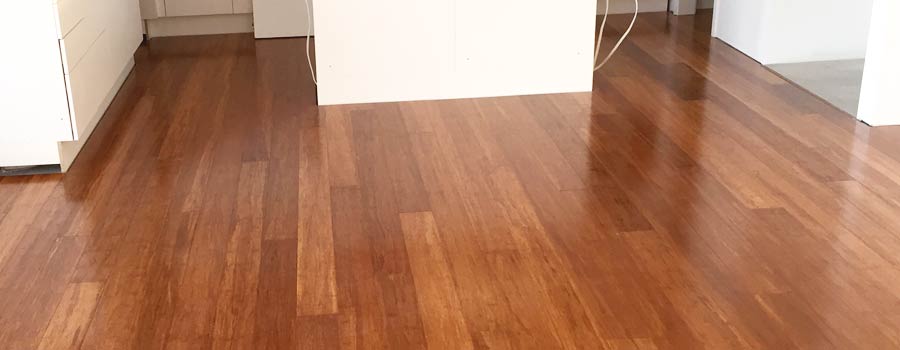
Bamboo Flooring Installation Service
Bamboo Refined specialise in installation of our bamboo flooring products. Our tradesmen have a reputation for leaving our clients happy, with the most professional, best quality, installations.
If you are a DIY Handyman, we offer the following instructions for the installation of our bamboo flooring.
Please read and follow our installation instructions carefully to ensure best results.
Pre-installation Considerations
- Examine flooring regarding grade, style, quality and straightness in a well-lit surrounding
- All major construction work involving any moist substances should be completed before installing bamboo flooring
- We do not recommend installation in bathrooms, laundries or wet areas unless sub-floor as well as bamboo floor has been sealed beforehand
Acceptable Sub-Floor Types
- Plywood (min 10mm)
- Existing wood floor
- Resilient tile and sheet vinyl
- Underlay grade particle board
- Concrete slab
- Ceramic tile
Notes to Installing – In most cases it is preferable to “float” lay the bamboo flooring, as this method increases tolerance to sub-floor and/or laying imperfections, may cost less to install, and provides the best quality, most comfortable and stylish finish.
- Lay foam underlay first, placing edges together. Tape the full length of the joined edges
- Be sure to leave sufficient spaces for expansion. Small layouts or square rooms may only need as little as 4-5mm, but be sure to leave 6-8mm every 6 meters
- Do not install floating floor “hard” against fixed objects such as fireplaces, fixed walls etc.
- Use wood or plastic spacers to aid in maintaining spaces
- Sub-floor must be swept or vacuumed thoroughly and any loose or raised particles removed
- Sub-floor surface uneveness or variation must not exceed 5mm per metre
- If you have “floor squeaks” cure them before covering with bamboo flooring, by screwing or nailing sub flooring securely
- Where bamboo floor is to glued to a full sub-floor (eg. concrete or ply), we recomend using “ULTRASET Polyurethane Flooring Adhesive” (Note: We generally DO NOT recommend gluing down these floors)
Laying Bamboo Flooring
- Lay out flooring for visual selection. The careful placement of colour and grain will enhance the beauty of the finished floor
- Check boards, interlocking edges, or tongue and grooves for irregularities
- Ensure boards used for initial runs are straight
- Door casing should be undercut or notched so that flooring will fit underneath
- Begin each row of boards from the same end of the room
- Ensure an expansion joint is left at a maximum of every 6 meters
- Leave room for expansion against solid walls
- First row should be laid parallel to the longest wall, preferably along any hallway to be floored
- Secure first row by wedging
- Always place wedging between wall and flooring to assist in accurate spacing
- Remember to “stagger” end joints from row to row and always start each row with a cut end which is longer than 200mm
- Always use correct ‘tapping blocks’ to tap ‘click system’ flooring together, ensuring edges are never damaged.
- If using ‘tongue-and-groove’ flooring, glue board joints by applying wood glue to bottom of the groove.